

Expanders in Winter Garden, FL
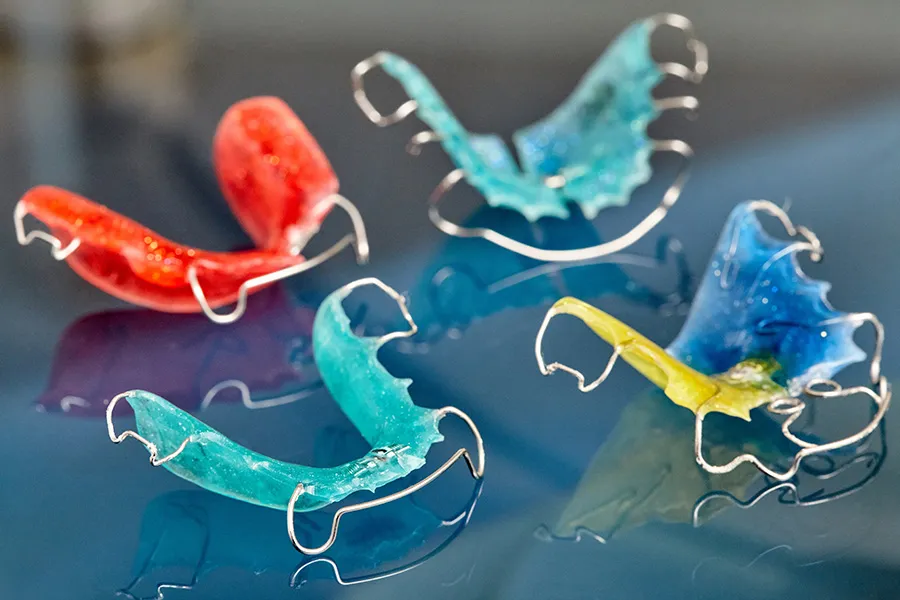
Artful Orthodontics serves patients seeking clear, reliable information about expanders. An expander is a small orthodontic device that gently widens the upper jaw to create more space in the dental arch.
How Expansion Works
Upper and lower expanders work in different ways.
Upper expansion widens the upper jaw itself, creating more space for developing teeth and tongue, allowing for proper swallowing and function. Expansion is most common in children and early teens because the palatal suture is not yet fully fused. During active expansion, a small key turns the center screw based on a prescribed schedule, encouraging bones to move apart and form new bone in the gap.
By correcting a narrow upper jaw, expansion can also allow the lower jaw to grow more freely and into a more natural position. Lower expansion focuses primarily on uprighting the teeth within the existing lower jaw, helping create additional arch space and improve the bite.
Why Consider Expansion?
- Create space to address crowding, often avoiding extractions
- Crossbite correction
- Improved tongue space and nasal airway
- Supports balanced facial growth when used at the right stage of development
Step-By-Step Expander Guide
Assessment
The orthodontist evaluates growth, bite, and airway, often with X-rays and a 3D scan.
Custom Appliance
An impression or digital scan is used to design a precise fit for your child.
Placement and Turns
The expander is bonded to molars and instructions are given for daily key turns.
Stabilization
After active expansion, the appliance remains in place for months while new bone stabilizes.
Your Expander Experience
Most patients feel pressure in the cheeks or roof of the mouth for a few minutes after each turn. Mild tenderness is common at first and often improves within days. Temporary changes such as extra saliva, a lisp, or a small space between the front teeth (diastema) are expected signs that expansion is occurring.
Eating, Comfort, and Care Tips
- Choose soft foods during the first days, then return to a normal diet while avoiding sticky or very hard items
- Use wax for any rubbing spots and consider an over-the-counter pain reliever if approved for you
- Rinse with warm saltwater to soothe tissues when needed
- Brush carefully around the bands and use a proxy brush or water flosser to clean under the appliance
- Do not skip or add extra turns unless instructed; reach out if a turn is missed for specific guidance
- Call the office if the appliance becomes loose, painful, or difficult to turn
Frequently Asked Questions About Expanders
Active expansion typically lasts 2 to 4 weeks. The appliance then remains in place for 3 to 6 months to allow new bone to stabilize.
Most patients notice pressure or mild soreness right after a turn. Discomfort is usually short lived and improves as tissues adapt.
Do not try to make up turns without guidance. Resume the regular schedule and contact the office for individualized instructions.
Adults may be candidates in certain cases. Because the suture is often fused, expansion may require additional techniques guided by the orthodontist.
Skip sticky candies, nuts, ice, and very hard or chewy foods that could loosen the appliance. Cut firm foods into small pieces.
Brush after meals, angle bristles toward the bands, and use a proxy brush or water flosser to reach under the framework.
Learn if an Expander is Right for Your Child
Call Artful Orthodontics at 407-910-1297 to schedule an evaluation.